


 Cart
Cart
 sales@molnova.com


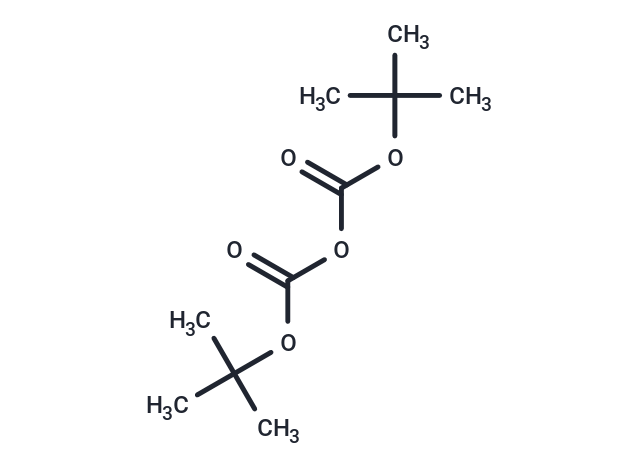
Di-tert-butyl dicarbonate
CAS No. 24424-99-5
Di-tert-butyl dicarbonate( —— )
Catalog No. M37070 CAS No. 24424-99-5
Di-tert-butyl dicarbonate(BOC anhydride) is a biochemical reagent that can be used in biochemical experiments.
Purity : >98% (HPLC)
 COA
Datasheet
HNMR
HPLC
MSDS
Handing Instructions
COA
Datasheet
HNMR
HPLC
MSDS
Handing Instructions
| Size | Price / USD | Stock | Quantity |
| 5MG | 48 | In Stock |


|
| 10MG | 67 | In Stock |
|
| 25MG | 104 | In Stock |
|
| 50MG | 150 | In Stock |
|
| 100MG | 215 | In Stock |
|
| 500MG | 530 | In Stock |
|
| 1G | Get Quote | In Stock |
|
Biological Information
-
Product NameDi-tert-butyl dicarbonate
-
NoteResearch use only, not for human use.
-
Brief DescriptionDi-tert-butyl dicarbonate(BOC anhydride) is a biochemical reagent that can be used in biochemical experiments.
-
DescriptionDi-tert-butyl dicarbonate(BOC anhydride) is a biochemical reagent that can be used in biochemical experiments.
-
In Vitro——
-
In Vivo——
-
Synonyms——
-
PathwayOthers
-
TargetOther Targets
-
RecptorOthers
-
Research Area——
-
Indication——
Chemical Information
-
CAS Number24424-99-5
-
Formula Weight218.25
-
Molecular FormulaC10H18O5
-
Purity>98% (HPLC)
-
Solubility——
-
SMILESCC(C)(C)OC(=O)OC(=O)OC(C)(C)C
-
Chemical Name——
Shipping & Storage Information
-
Storage(-20℃)
-
ShippingWith Ice Pack
-
Stability≥ 2 years
Reference
molnova catalog



related products
-
Rutundic acid
Rutundic acid has antitumor activity, exhibits potent tumor cell growth inhibiting property against Hela, A375, HepG2 , NCI-H446, and SPC-A
-
TPE-MI
TPE-MI (Tetraphenylethene maleimide) is an aggregation-induced luminescent agent that stains living cells, can be used to capture cysteines in exposed unfolded proteins, and detects protein damage after dihydroartemisinin studies of malaria parasites.
-
(Z)-9-nonadecene
(Z)-9-Nonadecene was identified the first time in T. melanocephalum. (Z)-9-Nonadecene is a major component in mandibular glands and iridodials are produced in pygidial glands.
